
Why the cleaning method matters for roof moss and algae
Roof moss and algae aren’t just cosmetic problems. They hold moisture against roofing materials, accelerate wear, and can lead to blocked gutters and localized rot if left unmanaged. Choosing the right cleaning method affects how long the problem stays away and whether the cleaning itself damages your roof. Code 3 Cleaning, a firefighter-owned exterior cleaning company serving Kenosha County, WI and Lake County, IL, focuses on soft washing and low-pressure methods where appropriate to remove growth while protecting roofing materials.
What happens if you use the wrong method?
High-pressure washing can strip granules from asphalt shingles, lift or crack shingles, and force water beneath roofing materials. That damage accelerates aging and can create entry points for leaks. On delicate roofing materials like cedar shake or older shingles, aggressive pressure cleaning can shorten service life significantly. Even on tile or metal roofs, indiscriminate high pressure can dislodge sealants or finish coatings.
How soft washing and low-pressure methods work
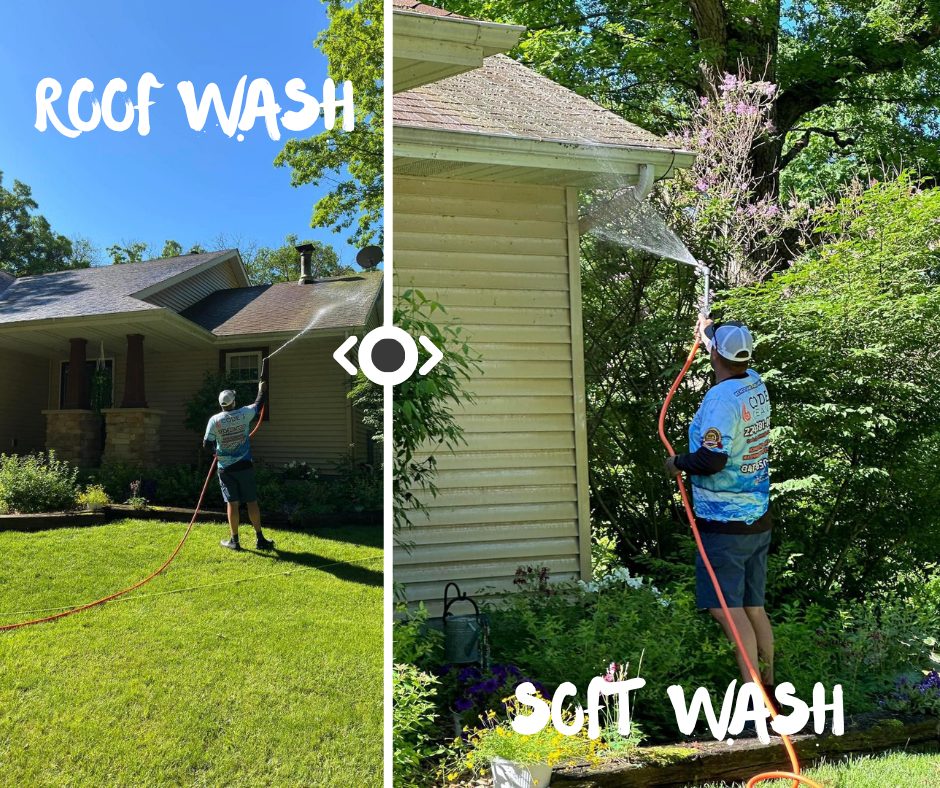
Soft washing uses lower water pressure combined with a cleaning solution that kills and loosens biological growth. The goal is to remove the root systems and spores of moss and algae so they don’t return quickly, while avoiding mechanical abrasion of the roof surface. Low-pressure rinses remove residue without blasting away granules, sealants, or finishes.
At Code 3 Cleaning we evaluate each roof before we begin: material, age, slope, and any nearby vegetation are all factors that guide whether a soft wash, low-pressure rinse, or a tailored approach is best.
Roof materials and appropriate approaches
Not all roofs are the same, and the cleaning approach should match the material:
- Asphalt shingles: Soft washing or low-pressure cleaning is almost always the safest option to avoid granule loss.
- Cedar shake and wood roofs: These are fragile and susceptible to pressure damage; soft washing is preferred, with care taken to avoid saturating wood.
- Tile and slate: These can often withstand slightly higher pressure in some scenarios, but soft washing protects coatings and reduces the chance of dislodging tiles.
- Metal roofs: Typically durable, but cleaning should avoid harming paint or finish — soft methods or manufacturer-recommended approaches are used.
Signs you have roof moss and algae
Homeowners should look for common indicators:
- Dark streaks or stains across shingles — often algae.
- Green, tufted growth in shaded areas or roof valleys — typically moss.
- Loose granules in gutters after rain.
- Visible moisture retention in roof valleys or under growth.
If you see these signs, it’s a good idea to have a professional inspection. Climbing on a roof without the right safety gear can be dangerous.
Practical prevention tips
After a professional cleaning, simple steps can reduce how often you need another service:
- Trim overhanging branches to increase sunlight and airflow around the roof.
- Keep gutters clean so water drains properly and doesn’t back up under roofing materials.
- Consider ridge vent and attic ventilation improvements to reduce roof moisture buildup.
- Discuss options like zinc or copper strips with a professional; in some cases they can discourage new growth when installed properly.
Why hire a professional like Code 3 Cleaning?
Roof cleaning involves working at heights and handling cleaning agents and runoff responsibly. Code 3 Cleaning is firefighter-owned and fully insured, which means we bring a safety-first mindset to every job. We serve homeowners across Kenosha County, WI and Lake County, IL from our base at 11452 14th Ave, Pleasant Prairie WI, and we follow practices designed to protect your roof, landscaping, and local environment.
We use soft washing and low-pressure methods where appropriate, selecting the right approach for your roof type and condition. For more detail about our approach to safe, effective roof work, see our roof washing page.
What to expect during a professional roof cleaning
A typical service includes:
- A roof inspection to determine material, condition, and the location of moss and algae.
- Protection measures for landscaping, vents, and non-target surfaces.
- A tailored application of an industry-appropriate soft wash solution, allowed time to work on growth, and a low-pressure rinse where needed.
- Cleaning of gutters and downspouts if requested, and a final walk-through to identify any concerns.
FAQ — Roof moss and algae
How often should I have roof moss and algae cleaned?
It depends on local conditions. Heavily shaded homes or properties surrounded by trees often need attention more frequently. Many homeowners in this region schedule cleaning every 3–7 years, but an inspection will provide a more specific recommendation.
Can I clean roof moss and algae myself?
Light maintenance like keeping gutters clear and trimming branches is fine for most homeowners. Climbing on roofs or applying chemical treatments without training can be hazardous and may damage roofing materials. Hiring a professional reduces safety risk and helps avoid unintended roof damage.
Will cleaning stop moss and algae from returning?
Cleaning removes existing growth and reduces the immediate problem. Preventive measures such as increased sunlight, better ventilation, and targeted installation options can slow regrowth. Because spores are airborne, no method can permanently eliminate the possibility of future growth.
Does cleaning create runoff concerns?
Responsible professionals take runoff management seriously, protecting landscaping and avoiding unnecessary discharge to nearby storm drains. If you have concerns about runoff near sensitive plantings, discuss them during scheduling so appropriate protections can be put in place.
Next steps and contact
If you’re seeing the signs of roof moss and algae, or if you want an inspection to learn the safest way to restore your roof’s appearance and health, call Code 3 Cleaning at 224-381-0033. We’re fully insured, firefighter-owned, and serving Kenosha County, WI and Lake County, IL from 11452 14th Ave, Pleasant Prairie WI. You can also request a visit through our contact page.
Cleaning the roof the wrong way can cost more in the long run. Let a professional evaluate your roof and recommend a method that removes growth while protecting the surface beneath.
Leave a Reply