
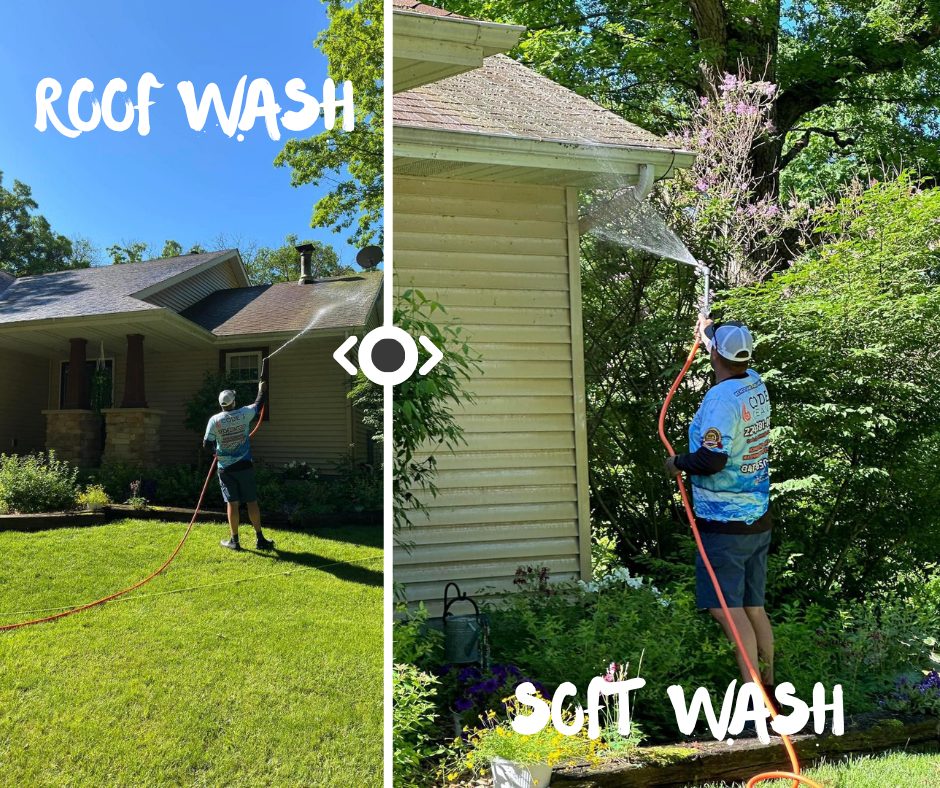
Why soft washing is the right choice for vinyl siding
Vinyl siding is durable and low-maintenance, but left uncleaned it can collect algae, mildew, mold, pollen, and other organic residues that cause staining and surface deterioration. For vinyl, the cleaning approach matters: aggressive high-pressure washing can force water behind panels or damage seams, while soft washing vinyl siding uses low-pressure application and cleaning chemistry to remove biological growth safely and effectively. Code 3 Cleaning — a firefighter-owned, fully insured exterior cleaning company serving Kenosha County, WI and Lake County, IL — uses soft washing/low-pressure methods where appropriate to protect your home while restoring curb appeal.
What exactly is soft washing?
Soft washing is a method that combines low-pressure water with a formulated cleaning solution to remove organic buildup. Instead of relying on force, soft washing relies on the cleaning solution to penetrate, break down, and kill the organisms (algae, mildew, moss, lichens) that adhere to siding. After the solution has had time to work, technicians rinse the surface gently with low pressure so the siding is cleaned without risk of damage.
Key differences from pressure washing
- Pressure washing uses high PSI to blast dirt away; soft washing uses chemicals plus low pressure.
- Soft washing targets biological growth at the root, reducing faster recurring stains.
- Soft washing is safer for vulnerable surfaces like vinyl, painted trim, and window seals.
How soft washing removes organic buildup from vinyl siding — step by step
The cleaning process used by professionals is deliberate and designed to protect your home while restoring the siding. Typical steps include:
1. Inspection and preparation
A trained technician inspects the siding to identify the type and extent of buildup, check for loose panels or damaged trim, and note landscaping or surfaces that need protection. Preparation can include covering plants or sensitive surfaces and making sure downspouts, vents, and electrical fixtures are not exposed to overspray.
2. Application of the cleaning solution
Rather than blasting the surface, a professional applies a low-concentration, biodegradable cleaning solution formulated to break down organic matter. The solution contains surfactants to lift dirt and agents that target microbial growth, allowing stains and biological films to loosen without mechanical force.
3. Dwell time
The solution is allowed to dwell for a controlled period—long enough to kill and loosen algae, mildew and other growth but short enough to avoid unnecessary exposure of landscape. Dwell time is important because biological stains adhere at a microscopic level; chemical action, not pressure, separates them from the siding.
4. Gentle rinse with low pressure
After the solution has done its work, crews rinse the siding using low-pressure water. This removes the dissolved and lifted residues without risking water intrusion or physical damage to the siding, trim, or caulking.
5. Final inspection
Technicians walk the property to confirm even cleaning, address any missed spots, and remove protective coverings. If there are areas where growth has been particularly stubborn, a follow-up spot treatment may be recommended.
Why soft washing is especially appropriate for vinyl siding
- Vinyl is a flexible, interlocked system of panels—high-pressure washing can dislodge panels, drive water behind them, or strip caulking.
- Organic stains on vinyl are often surface-level but cling in textured grooves and seams; soft washing’s chemical action reaches those spots without damage.
- Low-pressure rinsing preserves finish and color while removing the cleaning solution and debris.
Practical considerations for homeowners in Kenosha County and Lake County
Local weather, tree cover, and humidity affect how quickly siding accumulates growth. Homes near wooded lots or bodies of water may need cleaning more often. When scheduling a soft wash, choose a dry day and a week without heavy wind to limit runoff and ensure proper dwell time. Because Code 3 Cleaning is fully insured and firefighter-owned, we follow safety-minded procedures and local ordinances while working on residential properties across Kenosha and Lake counties.
Maintenance tips after soft washing
- Trim tree branches and shrubs away from siding to improve sunlight and airflow, which reduces regrowth.
- Inspect caulking and seams annually—soft washing is safe, but pre-existing defects can allow water intrusion during any cleaning.
- Consider scheduled cleanings based on exposure—homes in shady, damp areas typically benefit from more frequent service.
Soft washing vs. DIY cleaning: know the risks
DIY cleaning can work for light dirt, but homeowners risk using too much pressure, the wrong solutions, or improper application that can harm siding, landscaping, or finishes. Professionals have experience controlling dwell time, protecting plants and fixtures, and rinsing safely. If you’re not sure whether DIY or professional soft washing is right for your house, contact the technicians who can assess your siding and recommend an approach.
Frequently asked questions
Is soft washing safe for all vinyl siding?
Soft washing is safe for most vinyl siding when performed properly. The low-pressure approach avoids forceful water entry behind panels and prevents damage to seams and trim. A preliminary inspection ensures soft washing is the correct method for your home.
How long will the results last?
How long a soft wash stays clean depends on local conditions: sun exposure, humidity, nearby vegetation, and roof runoff. In many cases, homes remain clean for months to a couple of years. Regular maintenance and trimming nearby plants will extend the time between cleanings.
Will soft washing remove old stains or paint discoloration?
Soft washing removes organic stains such as algae, mildew, and pollen buildup. It will not repair physical damage or remove deeply embedded staining from years of neglect in all cases. An inspection can determine whether additional treatments are needed.
Is runoff a concern?
Professional teams take steps to minimize and manage runoff, protecting plants and hardscape. If you have concerns about landscaping, pools, or sensitive areas, discuss them during scheduling so we can plan protections.
Ready to restore your siding the safe way?
If you’re seeing streaks, green or black staining, or surface growth on your vinyl siding, soft washing vinyl siding is often the safest, most effective way to remove that buildup without risking damage. Code 3 Cleaning is firefighter-owned, fully insured, and serves Kenosha County, WI and Lake County, IL. Call us at 224-381-0033 to schedule an inspection or learn more, or contact us online. For more information about our approach to exterior surfaces, see our house washing service page.
Office: 11452 14th Ave, Pleasant Prairie, WI
Leave a Reply